The EU GREEN project began with a clear vision: to bring young people and youth workers closer to the concept of urban gardens as a means of learning, sustainability, and collective action. Over the course of several months, Youth on Board implemented a series of activities that transformed this vision into tangible experiences with visible educational and local impact.
The initial activities focused on introducing the core topics through two workshops – one with youth workers and another with young participants. Through lectures, discussions, and interactive games, the participants explored urban gardens as multifunctional spaces offering opportunities for social interaction, education, and connection with nature. These sessions created room for idea exchange and inspired the youth to imagine their own future green corners within urban environments.
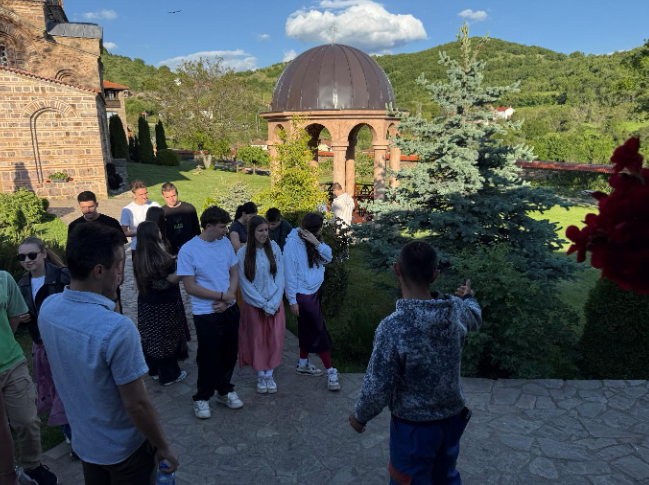
After the theoretical foundation was laid, the project moved to field-based learning. The visit to the urban garden surrounding the monastery in Lesnovo was a living lesson. Participants had the opportunity to speak with a man who has voluntarily cared for this garden for over two decades, nurturing trees that are over 800 years old. This experience not only provided insight into botanical conservation but also offered powerful personal inspiration on how love for nature can become part of everyday life.
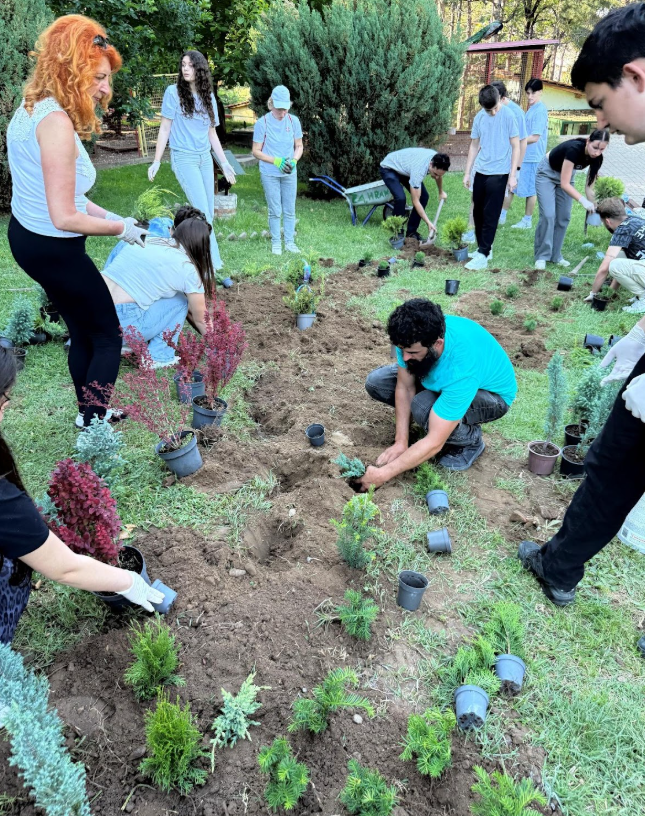
The following activity was dedicated to preparing the creation of our own urban garden. Participants explored available plant options, participatory design methods, and ecological maintenance techniques. All of this served as preparation for the final activity: the implementation of an urban garden designed entirely by the participants themselves, in the shape of a giraffe – a symbol of vision, resilience, and collective creativity. The garden was primarily composed of perennial evergreen trees, chosen for their adaptability to urban conditions and their ability to provide long-term greenery throughout the year.
The impact of the project is visible on multiple levels. Young people gained new knowledge, practical skills, and the confidence to initiate local eco-projects. Youth workers were equipped with new tools and approaches for working with young people in an environmental context. And the local community received not just a physical garden, but a powerful symbol of collaboration, inspiration, and sustainability.
EU GREEN has sparked dialogue about green public spaces – but more importantly, it has inspired action. This was not just a series of workshops and events, but a process of cultivating a new generation of eco-conscious young leaders.
The project continues, but the early results already show one important truth: small actions can lead to long-lasting green change.