As part of the EU GREEN project, Ergon a Favore dei Sordi carried out a series of educational and practical activities aimed at exploring urban gardening as a tool for learning, inclusion, and active participation. The activities involved young people, including individuals with disabilities and multiple vulnerabilities, and were designed to combine environmental education with accessible and inclusive methodologies.
The first phase of the activities focused on educational workshops held at Ergon’s premises between January and March 2025. Through six interactive sessions, participants explored key topics related to urban gardening, environmental sustainability, seasonality, food production, and civic responsibility. Rather than relying on traditional frontal lessons, the workshops were organised as laboratory-based activities, combining short explanations with videos, images, and group work. This approach allowed participants to actively engage with the content and to develop both linguistic and civic competences related to environmental themes.
Accessibility was a central element throughout the workshops. Educational materials were adapted to different needs, and communication was supported through visual tools, sign language, and personalised learning strategies. These measures ensured that all participants could take part meaningfully, regardless of their abilities or background.
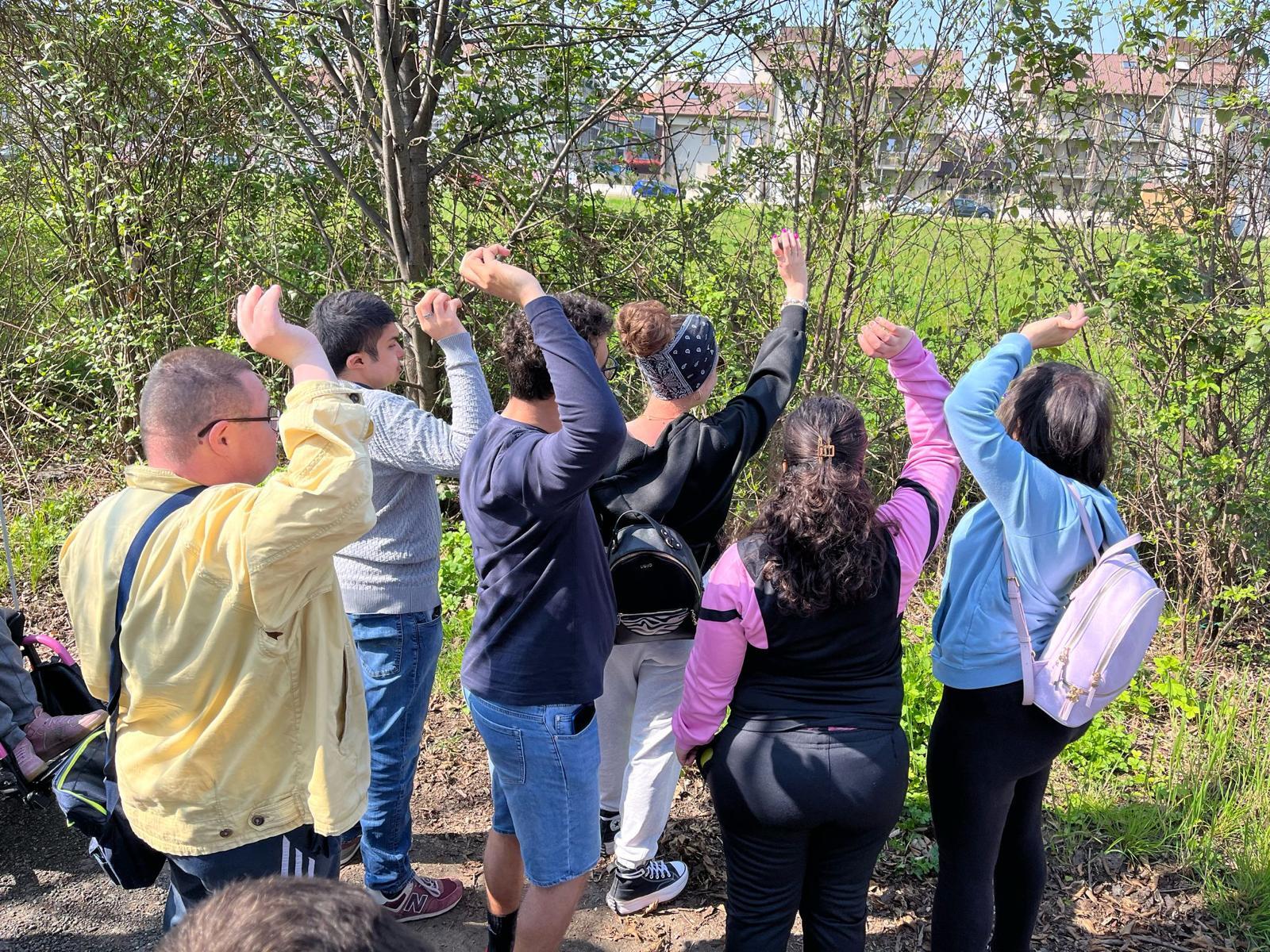
Building on the knowledge gained during the workshops, the second phase of the activities moved towards practical, hands-on experiences. Over a cycle of six meetings, participants worked together to improve and expand an existing green space within Ergon’s premises. Indoor activities were dedicated to seed preparation, the creation of sustainable substrates, and the design of accessible garden supports. Outdoor activities focused on cleaning and reorganising the garden, restoring pathways and borders, installing raised plant containers, and planting aromatic herbs.
One of the most appreciated aspects of the practical activities was the collective creation of an accessible garden space. Participants did not simply carry out tasks, but were actively involved in decision-making and design processes. Working in mixed groups alongside educators and young volunteers, people with disabilities were supported according to their individual levels of autonomy, ensuring a collaborative and inclusive learning environment.
The impact of the activities went beyond the physical transformation of the space. Participants developed practical skills related to gardening, strengthened their sense of responsibility, and experienced the value of contributing to a shared project. Many expressed satisfaction in seeing concrete results from their work and in knowing that the garden was designed for their own use and enjoyment.
The activities also had a positive effect on the wider community. Families and visitors had the opportunity to learn more about Ergon’s educational approach and the importance of inclusive green spaces. The garden has now become a permanent part of the organisation’s educational activities and will continue to be used for workshops and learning experiences in the future.
Through these activities, the EU GREEN project demonstrated how urban gardening can become an effective educational tool, capable of bringing together sustainability, inclusion, and active participation. At Ergon, the garden is not only a green space, but also a place of learning, collaboration, and shared responsibility.
 (2).jpeg)
.jpeg)